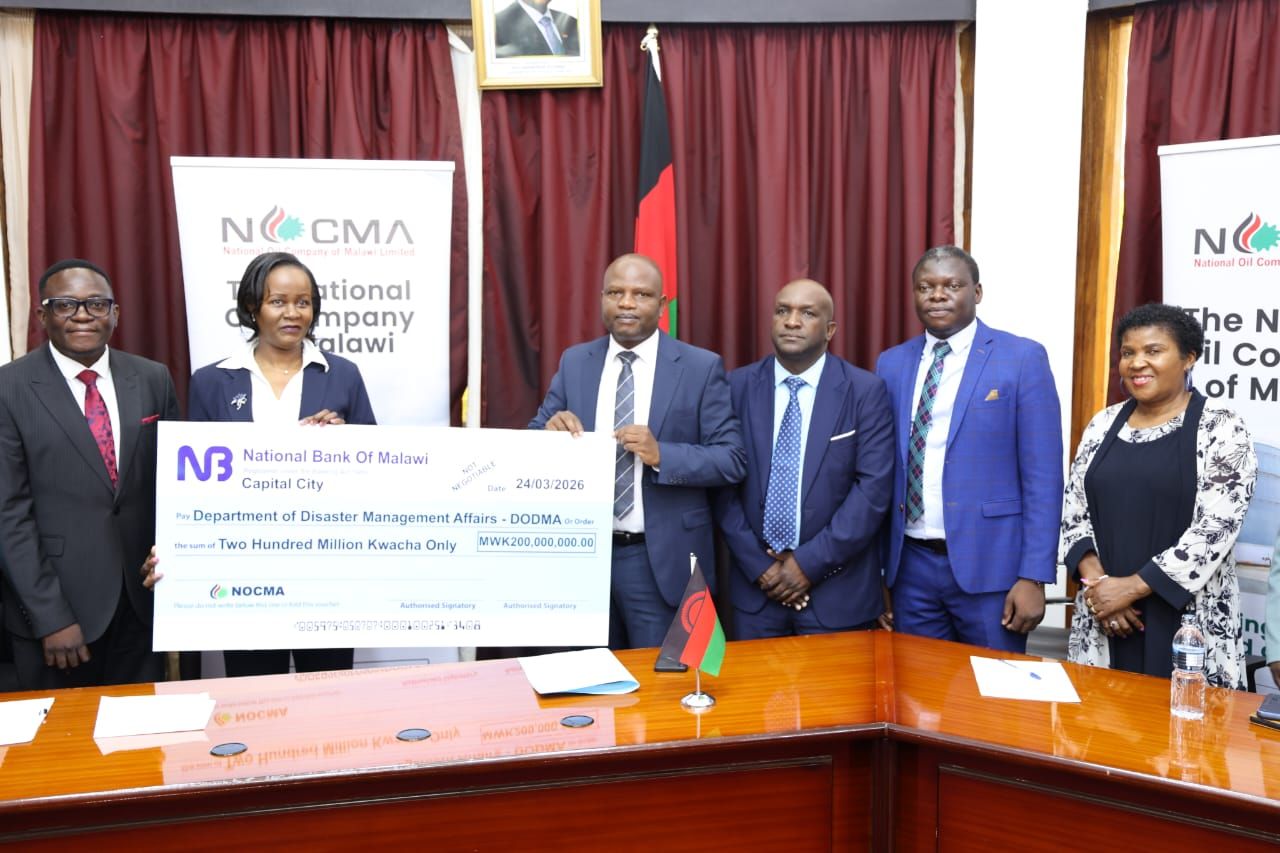
The National Oil Company of Malawi (NOCMA) is under Cables’ radar following reports that it paid approximately K1.5 billion to individuals or entities it believed were legitimate suppliers capable of supplying fuel to the country only for the deal to turn into a scam.
Cables can confidently reveal.
The payments have raised serious fiscal and accountability concerns, amid fears that public funds may have been stolen or released without adequate verification of the suppliers’ identities, legitimacy and capacity to deliver fuel.
It remains unclear how the individuals or companies were identified and verified before the K1.5 billion was released, with the money reportedly paid in anticipation of fuel supplies to the Malawi Government only for the funds to allegedly disappear without the expected fuel being delivered.
Under a robust procurement and supplier due-diligence system, an institution would ordinarily be expected to establish a supplier’s legal identity, business registration, ownership details, tax compliance, banking information and, most importantly, its actual capacity to deliver the contracted goods or services.
The issue comes at a time when Malawians are already expressing concern over the rising tax burden and increasing prices of goods and essential services.
If public money amounting to K1.5 billion was paid to fraudulent or improperly verified suppliers, taxpayers will rightly demand answers on how the payments were authorised and what safeguards were in place to protect public resources.
NOCMA operates in the fuel sector, which is strategically important to Malawi’s economy.
Any disruption in fuel supply can have far-reaching consequences for transportation, agriculture, industry, businesses and the prices of essential commodities.
For this reason, any financial losses or procurement failures at NOCMA could have consequences beyond the immediate amount involved.
There is also a wider public-interest dimension to the matter.
The K1.5 billion in question represents public resources, meaning Malawians have a legitimate right to know who received the money, what fuel or services were expected in return, whether anything was delivered and whether the country received value for money.
An independent and transparent investigation should therefore be instituted to establish exactly what happened.
Such an investigation should determine whether procurement procedures were followed, who authorised the payments, whether the suppliers were genuine, whether they had the capacity to supply fuel and whether NOCMA received any fuel or services in return.
If wrongdoing is confirmed, authorities must move to recover the funds and ensure that all individuals responsible are held accountable.
The matter should also trigger a comprehensive review of NOCMA’s supplier-verification procedures, payment controls, internal audit systems and overall procurement oversight to prevent similar incidents in the future.
At a time when ordinary Malawians are facing increasing economic pressure, every suspected loss of public funds deserves a thorough, transparent investigation and full accountability.
Cables will continue following the matter.
About the Author