Screenshot
How much medicine is lost through staff theft?
How much disappears through weak stock management?
How much is diverted by people who understand the health system well enough to exploit its loopholes?
These are questions that require serious answers.
Cables investigations have established that the recurring shortage of medicines in Malawi’s public hospitals has for years been blamed almost entirely on government failure, inadequate funding and weak supply systems.
But there is another uncomfortable question that must be asked: how much of the medicine shortage is being caused by theft from within the health system itself?
Whenever patients complain that there are no medicines in public hospitals, health workers are often among the loudest voices expressing concern and demanding action from government.
But this raises a difficult question: are all those expressing concern genuinely speaking for suffering patients, or are some complaining because medicines that would otherwise find their way into private pharmacies and medicine stores are no longer available?
Medicine theft in Malawi is not a new phenomenon.
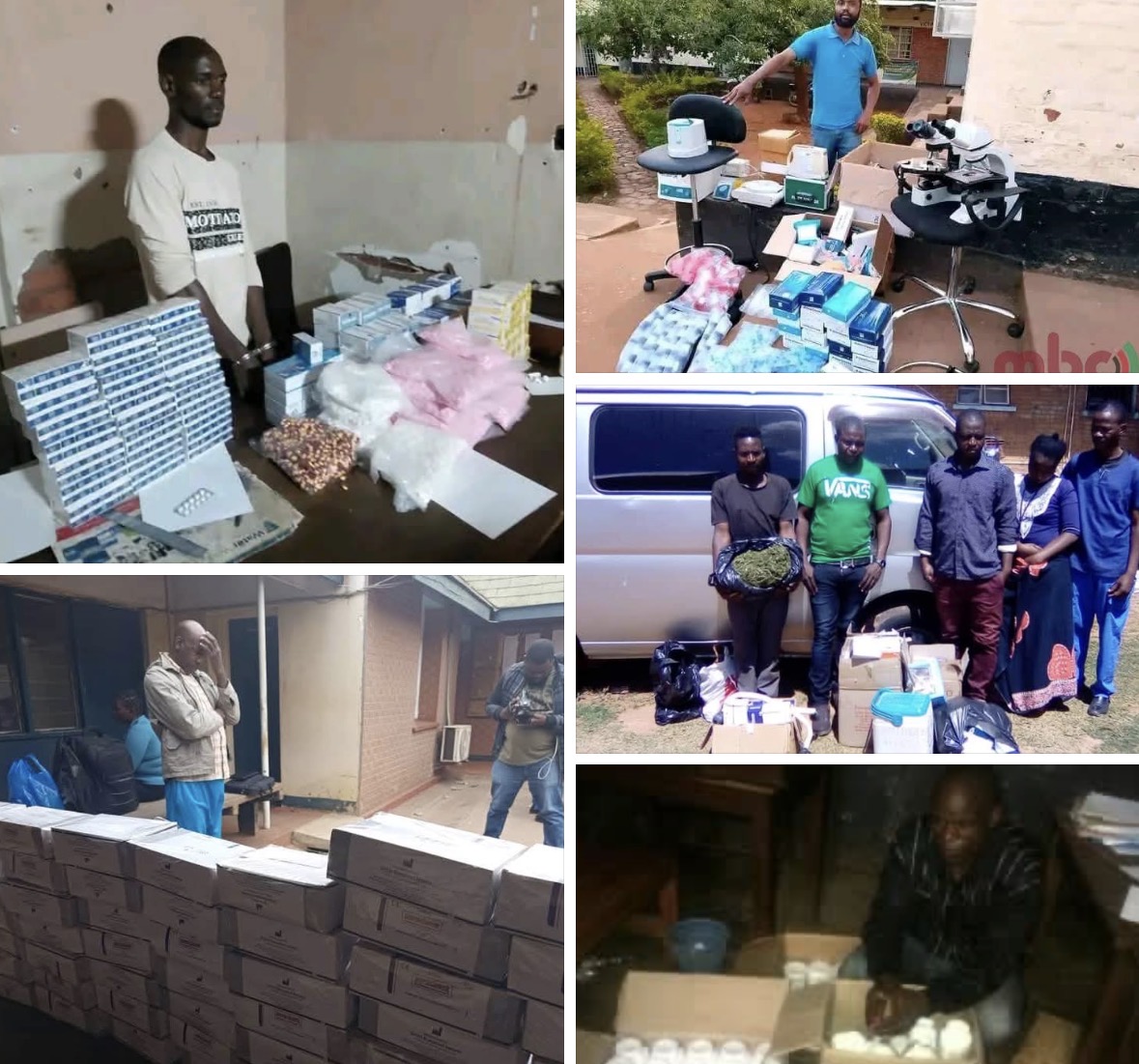
Reports of drugs and medical supplies being stolen from public health facilities have surfaced repeatedly over the years. Yet despite investigations, arrests and public outrage, the problem continues.
The tragedy is that while patients are being told that medicines are unavailable, some of those entrusted with protecting and dispensing those medicines may be contributing to their disappearance.
However, the problem should not be used to condemn every health worker.
Many honest and dedicated doctors, nurses, pharmacists, laboratory personnel and other health professionals continue to serve patients with integrity under extremely difficult conditions.
They should not be painted with the same brush as those involved in theft and corruption.
But the existence of honest health workers does not mean the system should ignore those who abuse their positions.
The Disease Is Within the System
The real problem is bigger than an individual nurse, pharmacist or student being caught with stolen medicines.
The real question is why the system continues to allow the same crimes to occur repeatedly.
Every district hospital and major public health facility has a constant movement of health workers, students, interns, suppliers and other personnel. Medicines and medical supplies pass through several hands before reaching the patient.
This creates numerous opportunities for theft if there are weak internal controls.
The Ministry responsible for health has trained professionals with expertise in pharmacy, medicine, laboratory services, logistics and health administration. The ministry should therefore be at the centre of developing systems capable of detecting and preventing theft.
The problem cannot simply be outsourced to the police, the Anti-Corruption Bureau, the Ombudsman, Parliament or the Judiciary.
Those institutions have important roles to play. Police investigate crimes. The ACB investigates corruption. The Judiciary interprets the law and imposes sentences. Parliament provides oversight.
But the Ministry of Health must take responsibility for preventing the theft from happening in the first place.
The police cannot run a hospital pharmacy. The Judiciary cannot design a medicine stock-control system. The Ombudsman cannot supervise every drug store. These are responsibilities that must begin with strong leadership and internal controls within the health system.
Executive Orders Are Not a Substitute for Internal Controls
President Arthur Peter Mutharika issued Executive Order No. 1 of 2026, which sought to restrict health workers from engaging in private practice amid concerns about conflicts of interest and the theft of government medicines.
The order generated resistance and debate among health professionals.
But the fundamental question remains: would banning private practice, on its own, solve the theft of medicines?
The answer is no.
A health worker does not need to own a private clinic to steal medicines. A person can steal drugs and sell them through other channels. Others may work with private pharmacies, traders or organised networks.
The long-term solution lies in strengthening internal systems.
Public health facilities need proper inventory controls, regular stock reconciliation, independent audits, digital tracking systems and clear accountability at every stage of the medicine supply chain.
There is a growing tendency to hold meetings and establish committees whenever reports of medicine theft emerge.
Stakeholders Cannot Replace Ministry Leadership
Parliamentary committees hold inquiries. Police launch investigations. Stakeholders are called to meetings. Workshops are organised.
But years later, medicines continue to disappear.
The country must ask whether these repeated meetings are producing lasting solutions or simply creating opportunities for allowances, publicity and political statements.
Malawians do not need endless conferences about a problem that has been known for years.
They need a system that works.
The Ministry of Health has the technical capacity to develop a comprehensive strategy against medicine theft. It can identify high-risk facilities, strengthen supervision, improve pharmacy controls and introduce systems that make it difficult to remove medicines without detection.
The Ministry should not wait until a scandal erupts.
Prevention must become part of everyday management.
Why Are Penalties So Weak?
Another concern is the punishment given to those convicted of stealing medicines and medical supplies.
When people steal medicines from a public hospital, they are not merely stealing government property. They may be taking away treatment from a child, a pregnant woman, an elderly patient or someone fighting for their life.
Yet public concern is often raised when suspects are arrested only for cases to end with penalties that appear insignificant compared with the value of the medicines and the suffering caused.
The justice system must recognise the seriousness of such crimes.
At the same time, harsh punishment alone will not solve the problem.
A person may be arrested today while the same weaknesses that enabled the theft remain untouched. Another person can simply take advantage of the same loopholes tomorrow.
That is why prevention and accountability must go together.
Leadership Must Be Accountable
The biggest question should be directed at the leadership responsible for managing the health system.
How can a problem that has been repeatedly exposed for years continue without a permanent solution?
How can the country continue discussing medicine theft while hospitals continue reporting shortages?
At some point, responsibility must move beyond blaming individual thieves.
Senior leadership must explain what systems have been put in place to stop the theft, how effective those systems are and why failures continue.
The Ministry of Health cannot successfully fight medicine theft through press statements and stakeholder meetings alone.
It requires daily supervision.
It requires proper stock management.
It requires surprise audits.
It requires digital monitoring.
It requires accountability.
And above all, it requires leadership that treats the theft of medicines as a national emergency.
Malawians Must Stop Fighting Over the Wrong Diagnosis
We can continue blaming the President, government, police, Parliament, the Judiciary and every other institution.
But if we fail to identify the root cause, we will continue treating the symptoms while the disease spreads.
The uncomfortable truth is that the fight against medicine theft must begin inside the Ministry of Health and within public health facilities themselves.
The ministry has the experts.
It has pharmacists.
It has clinicians.
It has laboratory professionals.
It has administrators.
It has supply-chain specialists.
It has people capable of identifying weaknesses and developing practical systems to stop theft.
The question is whether there is enough political and administrative will to act.
Malawians should not have to keep hearing the same stories about stolen medicines year after year.
If the country can identify the people involved, investigate them and hold them accountable, then surely it can also design systems capable of preventing medicines from disappearing in the first place.
Those health workers who remain honest deserve recognition and protection. They should not be forced to work in a system where corruption thrives while honest professionals suffer the consequences.
And those who steal medicines must understand that they are not simply stealing from government.
They are stealing from patients.
They are stealing from families.
They are stealing from communities.
And in some cases, they may be stealing someone’s chance to survive.
The Ministry of Health must stop pretending that the solution lies entirely outside its doors. The solution must begin with strong leadership, stronger internal controls and a genuine commitment to protect medicines meant for Malawians.
Until then, we may continue holding meetings, issuing statements and arresting a few individuals while the bigger system remains unchanged.
And the medicines will continue disappearing.
About the Author