Screenshot
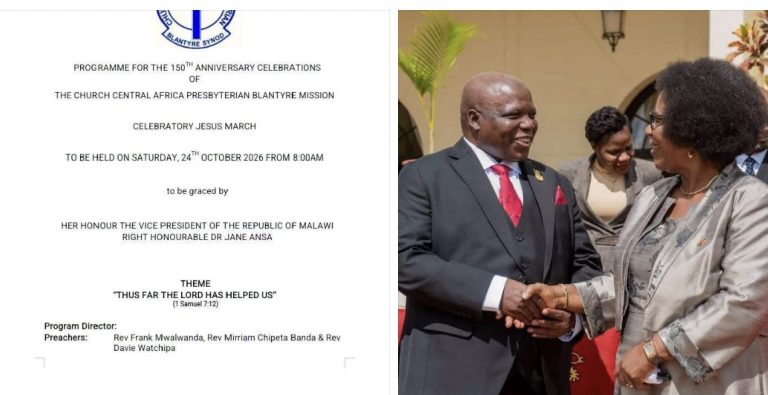
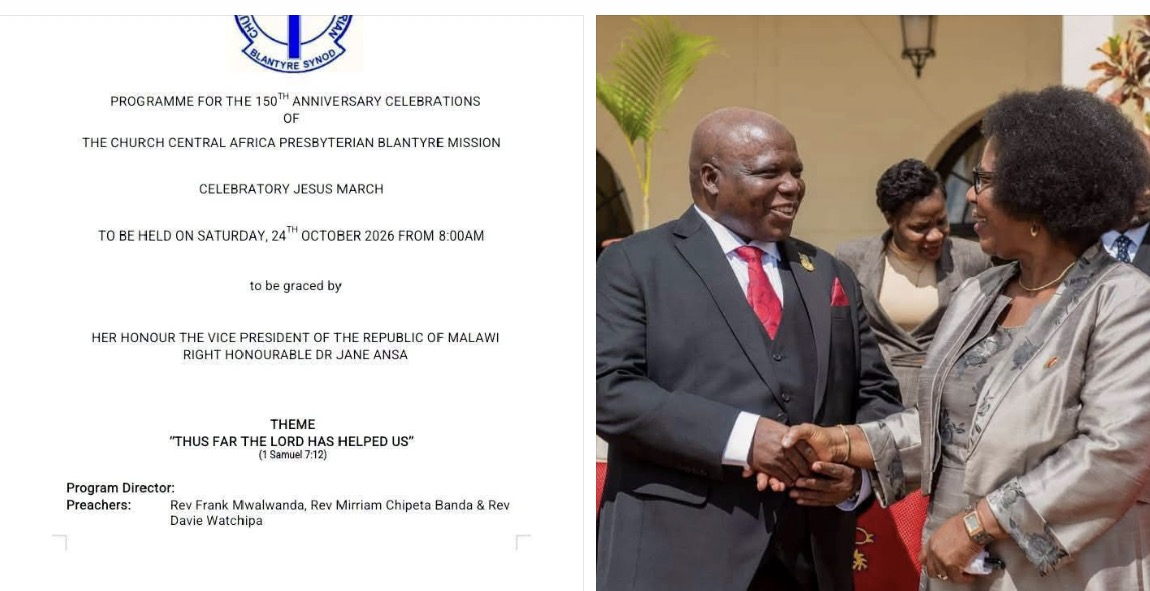
The Blantyre CCAP Synod invited Vice President Jane Ansah to be the Guest of Honour at celebrations marking 150 years of the Synod’s existence.
Vice President Ansah reportedly confirmed her availability to the church.
By her own account in an interview with Luntha TV, she does not make such decisions without informing President Arthur Peter Mutharika.
Before confirming her attendance, she sought clearance from the President.
Then came the first twist.
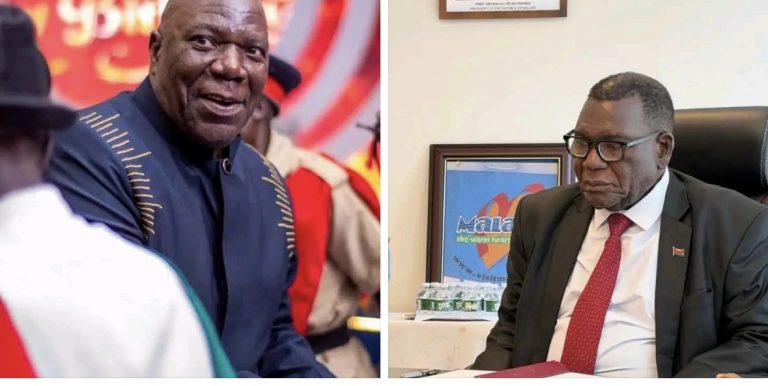
Chief Secretary to the Government Justin Adack Saidi, in what appears to have been his own administrative judgement, opted for Second Vice President Enock Chihana to represent President Mutharika at the historic celebration.
But the story did not end there.
In another turn of events, Justin Saidi reportedly changed course again and informed Foreign Affairs Minister Dr George Chaponda that he would represent President Mutharika at the same event because the government is practicing austerity measures.
Why was the austerity measure not applied as a deciding factor first when making arrangements that the Second VP will represent Mutharika ?
Justin Saidi waited to make a fool of President Mutharika by not making that decision first and only remembered about austerity when Chaponda was brought.
This is mockery to the image of President Mutharika .
One government. One function. A Vice President invited by the church . two different names presented as representatives of the same President.
How does such confusion arise within the same administration?
Who is coordinating these official engagements, and why should the President’s representation become a source of uncertainty at an important national and religious celebration?
The bigger concern is that the consequences of these administrative inconsistencies do not end with the officials involved.
They reflect directly on President Arthur Peter Mutharika, his administration and the legacy he seeks to build.
Justin Saidi must understand that government coordination is not a personal undertaking.
It requires consistency, consultation and respect for established communication channels.
President Mutharika’s legacy should not be put at risk by avoidable administrative confusion.
If the President is serious about strengthening his administration and protecting his reputation, then a review of the people responsible for coordinating government business is necessary.
Justin Saidi’s handling of this matter raises serious questions about whether he is helping the President succeed or exposing him to unnecessary reputational damage.
The Mutharika administration needs effective coordination, not confusion.
If the President’s legacy is to be protected, accountability must begin with those entrusted with managing the affairs of government.
About the Author