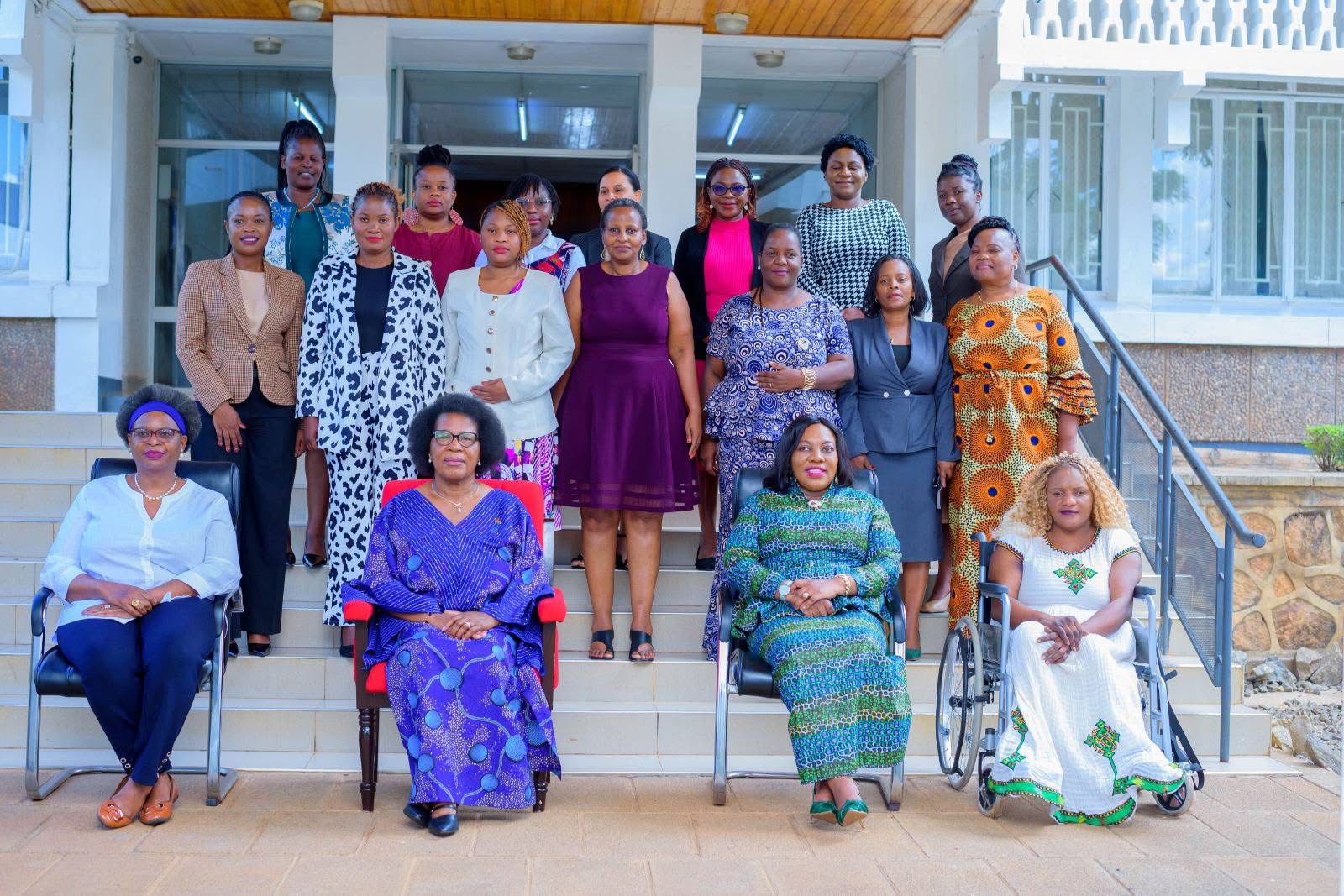
Vice President Dr. Jane Ansah SC, JA, (Retired) has thrown her weight behind the country’s women’s movement, emphasizing that unity and empowerment are key to the nation’s development. Dr. Ansah met with the Women’s Manifesto Movement, a coalition of organizations led by the Women’s Legal Resource Centre (WOLREC) and Oxfam, at Capital Hill offices in Lilongwe on Friday.
Dr. Ansah highlighted the challenges faced by women, including violence, health disparities, and limited access to education. She cited Rwanda’s example, where educating women has led to significant representation in civil service, and emphasized the need for government investment in staff and infrastructure to address these issues. The Vice President stressed that women’s participation in politics and decision-making is crucial for progress, reminding the delegation that human rights are categorized into three areas and that understanding the needs of the poor is essential for effective support.
The three categories of Human Rights are firstly, Civil and Political Rights, secondly, Economic, Social and Cultural Rights thirdly, Collective Rights (or Group Rights).
These categories cover a range of rights, including the right to life, liberty, and security; the right to education, healthcare, and social security; and the right to self-determination, cultural identity, and development.
Maggie Kathewera Banda, Executive Director of the Women’s Manifesto Movement, emphasized the need for increased budget allocation, technology, and machinery to improve farming and business. She stated, “At your own convenient time, we expect you to read through the Women’s Manifesto. We went across all corners of Malawi and engaged with women at different levels, and they highlighted key issues.” The Women’s Manifesto outlines critical areas requiring attention, including economic empowerment, land rights, climate change, and access to education and healthcare.
Letty Chiwala, UN Women country representative, pledged the organization’s support for Malawi’s women’s movement. UN Women is working with six coalitions, including Malawi and Canada, to drive change. Chiwala stated, “I am here to report globally that our leaders are supporting the cause and the role we want you, Vice President, to be part of the movement.” UN Women is collaborating with the Ministry of Gender to promote gender equality and empower women in Malawi.
The Women’s Manifesto Movement is urging all stakeholders to prioritize women’s empowerment and equality, highlighting concerns around social and religious beliefs that hinder women’s progress, gender norms, and access to justice. Women demand protection in the digital space, where they are often subjected to online abuse, and call for increased funding to combat gender-based violence. As Dr. Ansah concluded, “United we stand, divided we fall,” emphasizing that unity is key to progress and women’s empowerment is essential for Malawi’s development.
The Women’s Manifesto Movement, a collective effort led by the Women’s Legal Resource Centre (WOLREC) and Oxfam in Malawi, paid a courtesy visit on Friday. This movement comprises various organizations, including Pamodzi Kuthetsa Nkhanza Program, the Foreign Commonwealth and Development Office, the European Union Delegation to Malawi, NGO Gender Coordination Network, and United Nations Women.
The movement’s second edition of the Women’s Manifesto was launched ahead of Malawi’s September 16 General Election, outlining key demands and priorities for Malawian women and girls. The manifesto covers 15 thematic areas, including education, leadership, politics, governance, agriculture, peace and security, access to justice, violence, and climate change.
About the Author