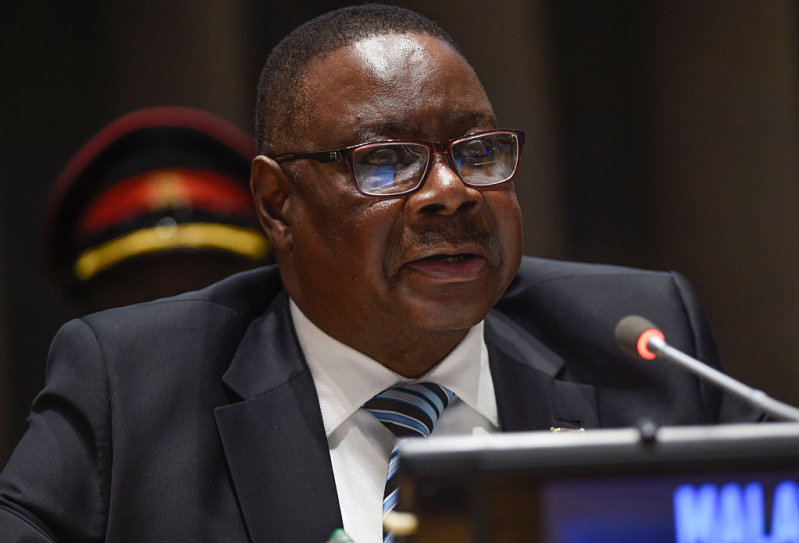
NEW YORK, NY - SEPTEMBER 18: Peter Mutharika President of Malawi speaks on September 18, 2016 in New York City. (Photo by Riccardo Savi/Getty Images for International Commission on Financing Global Education Opportunity)
The Government of Malawi under the leadership of His Excellency Professor Arthur Peter Mutharika has received praise following a notable decline in the country’s inflation rate, signaling positive progress in efforts to stabilize the economy and ease the cost of living for Malawians.
According to the National Statistical Office (NSO), Malawi’s year-on-year inflation rate decreased to 23.4 percent in May 2026, down from 24.3 percent in April 2026, representing a decline of 1.1 percentage points.
The improvement was largely driven by a reduction in food inflation, which dropped from 19.1 percent in April to 17.6 percent in May. Non-food inflation also registered a marginal decline, easing from 33.2 percent to 33.0 percent during the same period.
On a month-to-month basis, inflation stood at -0.2 percent in May 2026, compared to -2.5 percent in April, reflecting continued moderation in price pressures across key sectors of the economy.
The NSO further reported that urban areas recorded a monthly inflation rate of 0.3 percent, while rural areas experienced a lower rate of -0.5 percent, largely due to falling food prices, a development that is expected to provide relief to households across the country.
Economists note that the decline in inflation is significant because it helps preserve the purchasing power of citizens, particularly low-income households that spend a larger share of their income on food and essential commodities. Lower inflation also contributes to a more stable economic environment by reducing pressure on businesses, encouraging investment, and supporting sustainable economic growth.
The reduction in food inflation is particularly important for rural communities, where household incomes are often vulnerable to fluctuations in food prices. As food prices ease, families are able to allocate more resources to other essential needs such as education, healthcare, and small-scale investments.
The latest figures are being viewed by supporters of the administration as an indication that government efforts aimed at strengthening economic management, improving market confidence, and stabilizing key economic fundamentals are beginning to yield positive results. They argue that maintaining this downward trend will be crucial in fostering economic recovery, creating jobs, and improving living standards for Malawians.
While challenges remain, the latest inflation data offers renewed optimism that the economy is moving in a positive direction, with the decline serving as an important step towards restoring price stability and supporting long-term national development.
About the Author