Screenshot
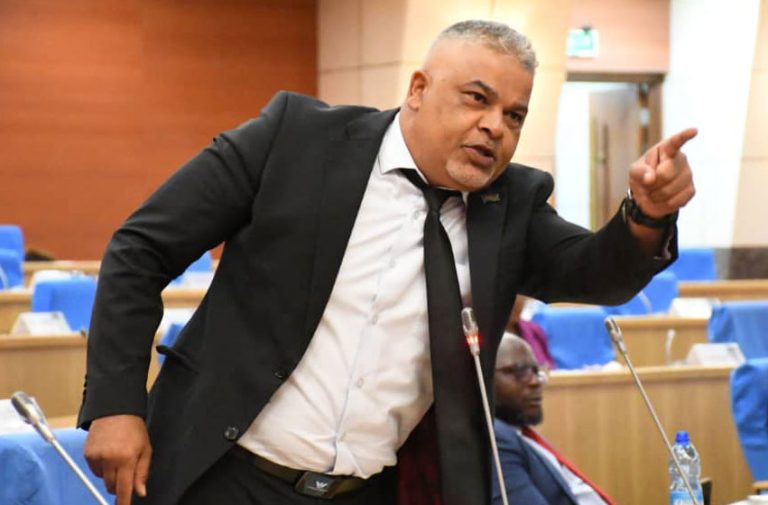
The Centre for Democracy and Economic Development Initiatives (CDEDI) has thrown its weight behind Speaker of Parliament Sameer Suleman, describing his decision to strengthen Parliament’s oversight role as “noble” and consistent with President Arthur Peter Mutharika’s pledge of a people-centred government and “no sacred cows” in the fight against corruption.
The intervention comes amid growing tensions between the Speaker and the ruling Democratic Progressive Party (DPP) following Suleman’s establishment of joint parliamentary committees to investigate what he described as matters of national importance that are “raising more questions than answers” among Malawians.
CDEDI says a statement issued on September 3 by DPP Secretary General Peter Mukhito has raised serious questions about the party’s understanding of governance, accountability and the constitutional separation of powers.
CDEDI Executive Director Sylvester Namiwa says the pressure being exerted on Suleman is misplaced, arguing that the Speaker’s constitutional responsibilities cannot be subordinated to party interests.
“The fact that Hon. Suleman’s Speakership is courtesy of the DPP does not give the party leeway to control him,” Namiwa said in a statement released in Blantyre on Friday.
He maintained that Suleman is the head of the Legislature and carries a non-partisan responsibility to represent the interests of Malawians.
Namiwa further argued that Parliament, as the representative institution of the people, has powers to summon public officials and hold the Executive accountable where there are concerns about governance and the public interest.
CDEDI also alleged that, following Suleman’s “ground-shaking” press briefing on Wednesday, the Speaker and some chairpersons of parliamentary committees had become targets of threats.
The organisation has called on authorities to ensure that members of Parliament and committee chairpersons are allowed to perform their constitutional duties without intimidation.
CDEDI says the joint committees are necessary to investigate allegations of institutional incompetence and corruption, which it claims have been compounded by what it describes as the “state capture” of key oversight institutions, including the Anti-Corruption Bureau, Financial Intelligence Authority and the office of the Director of Public Prosecutions.
The organisation further linked the current push for stronger parliamentary oversight to what it described as public dissatisfaction with the previous MCP administration, which lost power in the September 16, 2025 elections.
“We believe Suleman is acting in the best interests of the DPP, and only those in the party who have an agenda different from Mutharika’s are seeing things differently,” Namiwa said.
CDEDI described attempts to stop the Speaker’s oversight drive as “a fruitless attempt to halt a train that is already in motion.”
The organisation has also appealed directly to President Mutharika to clarify his position and publicly distance himself from the DPP Secretary General’s stance if, as CDEDI argues, it conflicts with his stated commitment to fighting corruption.
“We are appealing to President Mutharika to set the record straight by distancing himself from the party’s stand, as it runs counter to his unapologetic zero-tolerance for corruption,” Namiwa said.
CDEDI has meanwhile challenged Malawians with information on alleged corruption, abuse of public resources and other wrongdoing to come forward and assist the parliamentary inquiries.
The organisation says the committees provide an opportunity to expose what it calls “cartels that are bleeding our nation to death.”
At the centre of the dispute is a fundamental question: Where does party loyalty end and Parliament’s constitutional independence begin?
CDEDI reminded Mukhito that Parliament has three core functions representation, legislation and oversight and argued that the Speaker’s decision to initiate parliamentary inquiries should not be interpreted as an act of defiance against the President.
“The Speaker’s move cannot, and should not, be interpreted as disrespecting the State President,” the statement said.
CDEDI says it stands firmly with Suleman and the members of the joint committees, while warning that anyone threatening or attempting to intimidate them could ultimately face the consequences of the law.
With the committees now operational, attention is turning to the investigations themselves what they will uncover, how far they will go, and whether the political establishment will allow Parliament to exercise its oversight mandate without interference.
As Namiwa put it: “This is the only country we call home and we must strive to make it a better place to live in.”
About the Author