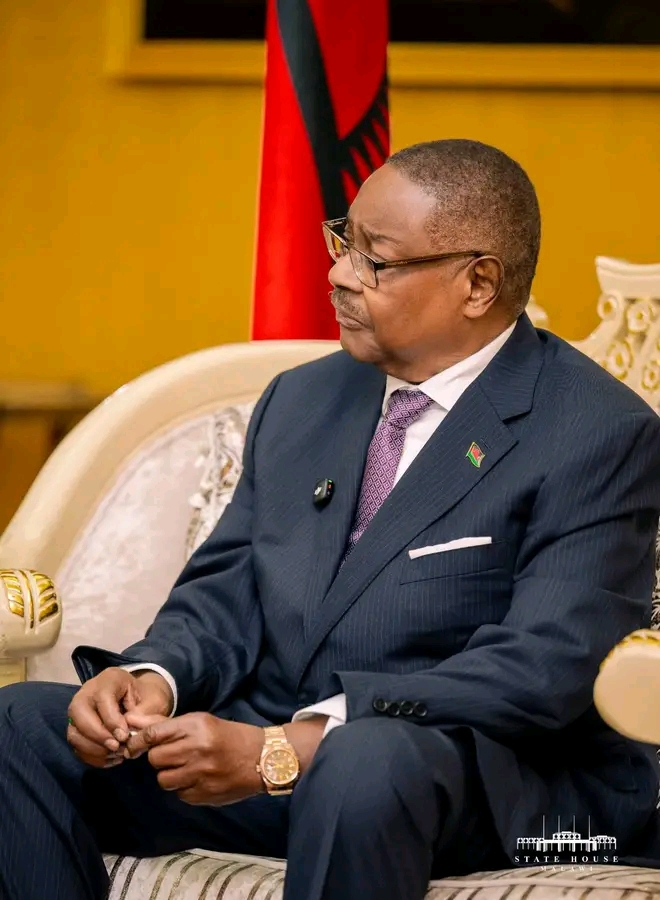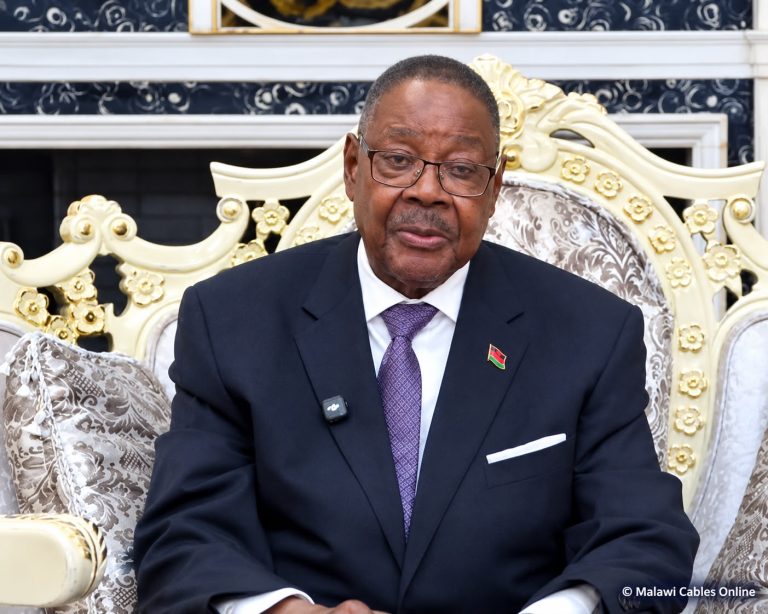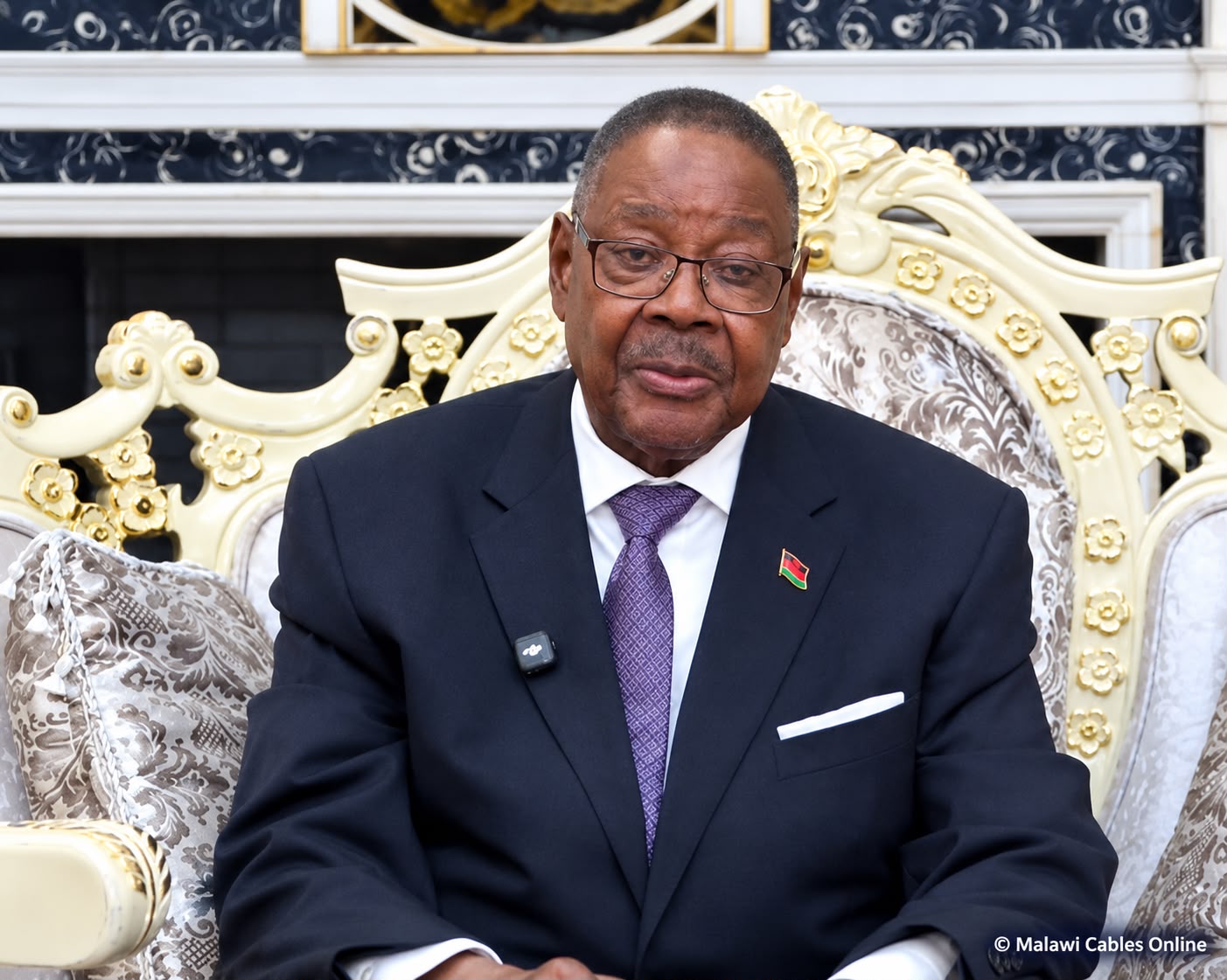
Malawi remains under constitutional government despite President Arthur Peter Mutharika’s private visit to South Africa, as questions emerge over who is running the country in his absence.
The debate surrounding President Arthur Peter Mutharika’s continued stay in South Africa has raised questions about leadership, accountability and the constitutional arrangements governing the country when the Head of State is outside Malawi.
UTM Party leader Dalitso Kabambe has challenged the government to explain who is running the country while the President remains abroad, arguing that although the trip may be private, governing Malawi is a public responsibility.
While transparency is an important part of democratic governance, the suggestion that Malawi has been left without leadership simply because the President is outside the country requires a closer examination of the Constitution and how government operates.
THE LAW DOES NOT SAY THAT THE PRESIDENT STOPS GOVERNING WHEN HE TRAVELS
Under Malawi’s Constitution, the President is the Head of State and Government and bears responsibility for providing executive leadership.
Section 88 of the Constitution establishes the President’s responsibility for upholding the Constitution and providing executive leadership in the national interest. Section 88(6) further provides that presidential powers and functions may be exercised personally by the President or by a Cabinet member or government official to whom the President has delegated those powers in writing, subject to the Constitution and other applicable laws.
This means that government business does not automatically come to a standstill when the President travels abroad.
The executive branch continues to operate through the Cabinet, ministers, public officers and the established institutions of government.
The President’s physical presence at State House is not a constitutional requirement for every government function to continue.
WHO PRESIDES OVER GOVERNMENT BUSINESS IN HIS ABSENCE?
Section 92(3) of the Constitution provides for Cabinet meetings to be presided over by the President or, in his temporary absence, the First Vice-President. If both the President and First Vice-President are temporarily absent, the Second Vice-President presides over Cabinet meetings.
This is an established constitutional arrangement designed to ensure continuity in the conduct of government business.
It is therefore incorrect to assume that the country has no leadership merely because the President is outside Malawi. The Constitution provides mechanisms for the Cabinet to continue its work during the President’s temporary absence.
However, presiding over Cabinet meetings is not, by itself, the same as automatically assuming every presidential power. The exercise of specific presidential functions must follow the applicable constitutional and legal procedures.
A PRIVATE TRIP IS NOT THE SAME AS A VACANT PRESIDENCY
The Constitution also distinguishes between a President who is temporarily outside the country and a President who is constitutionally unable to discharge the duties of the office.
Section 87 establishes a formal procedure for declaring presidential incapacity. It requires a written declaration supported by independent medical practitioners, signed by the First Vice-President and a majority of the Cabinet, and submitted to the Speaker of the National Assembly before the First Vice-President assumes the presidency in an acting capacity under that provision.
A private visit abroad does not, on its own, trigger this procedure. Nor does it automatically create a vacancy in the office of President.
Consequently, unless a relevant constitutional process or other applicable legal provision changes the arrangement, the President remains the holder of the office while abroad.
The central issue is therefore not whether Malawi has a President simply because he is travelling. It is whether the constitutional arrangements are being followed and whether the government is fulfilling its responsibilities to the people.
MALAWI HAS NOT STOPPED MOVING
Government is an institution, not a one-man operation.
Ministries continue to administer their portfolios, civil servants carry out their duties, public institutions deliver services, and the Cabinet continues to conduct government business within its constitutional mandate.
The absence of the President from the country does not automatically suspend the work of Parliament, ministries, local authorities, courts or other public institutions.
Malawi’s economy, public services and administration cannot simply be placed on hold every time the Head of State travels. The machinery of government is expected to continue operating within the law, irrespective of the President’s physical location.
That said, the mere existence of these institutions does not prove that every government function is being performed effectively. Any specific allegation that government business has stalled should be assessed against evidence of what has or has not been done.
But the claim that nobody is governing Malawi simply because President Mutharika is in South Africa overlooks the constitutional and administrative structures through which the country operates.
The bottom line is simple: President Mutharika’s private trip does not automatically remove him from office, transfer all his powers to another person or bring government to a halt. Malawi remains governed through its constitutional institutions, and any transfer or delegation of specific presidential functions must comply with the law.
About the Author