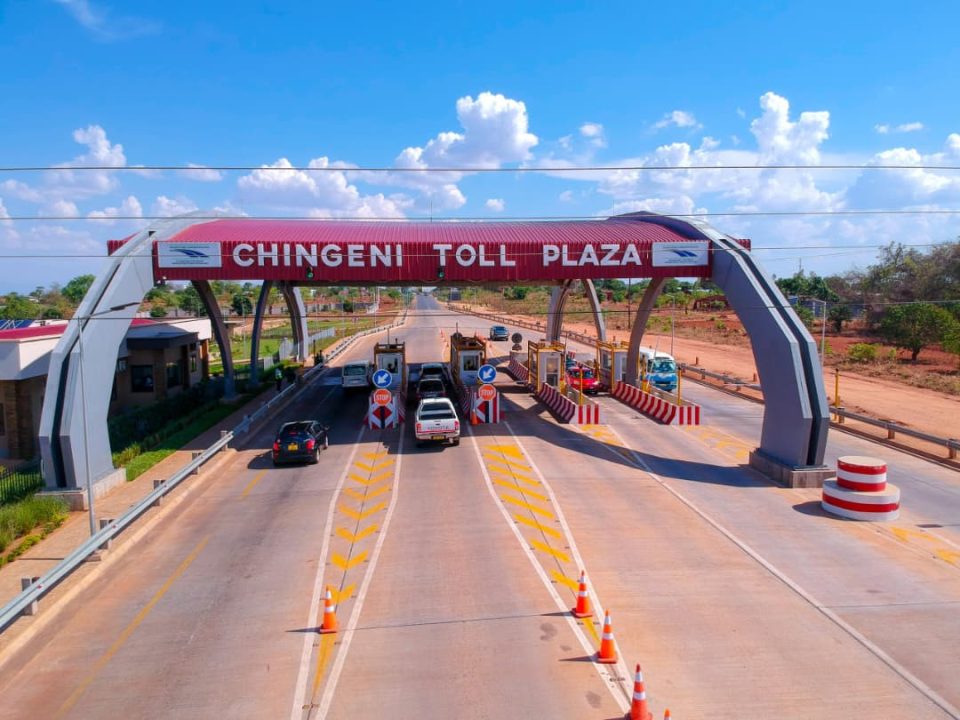
The Roads Fund Administration’s (RFA) expanding tollgate programme is increasingly attracting scrutiny amid allegations that Malawi Congress Party political control and influence is at play, not just traffic data as the main reason in determining where new toll plazas are to be constructed but influence from the opposition Malawi Congress Party, only cables can reveal .
At the centre of the controversy is the RFA’s Tolling Operations Manager, Dalitso Kadzamira , a direct relative to Mama Kadzamira and MCP diehard , a figure cables have established that has accumulated enormous influence and power within the institution , as at present , RFA has no Tolling Director.
Kadzamira, who joined the RFA in July 2023, was reportedly brought into the institution during Malawi Congress party regime under the tenure of former board member Chief Lukwa.
Since then, he has risen to become one of the most influential officials in the tolling division, overseeing key operational decisions in a department that has rapidly grown in financial significance.
Public records and RFA communications show that the tolling programme has become one of the administration’s most critical revenue streams.
The RFA says toll collections reached K1.8 billion in the first quarter of 2026 alone, representing a 96 percent increase from the same period in 2025.
The institution has also disclosed that toll gates have generated more than K16 billion since tolling was introduced in Malawi in 2021.
But behind the impressive figures lies growing concern over how new tollgate sites are being selected.
Officially, the RFA maintains that new tollgate locations are chosen based on traffic volumes and revenue potential.
However, insiders and governance critics argue that politics is increasingly influencing those decisions.
Two newly proposed tollgate sites ; Naluva along the Lilongwe–Salima Road and Chileka along the Lilongwe–Mchinji Road have particularly raised eyebrows. Strategically in MCP strongholds.
Sources familiar with internal discussions allege that the Naluva site was prioritised largely because it is associated with senior Malawi Congress Party (MCP) figure Richard Chimwendo Banda.
Questions are also being raised over the proposed Chileka tollgate, with critics claiming the area was selected because of political alignment rather than measurable traffic demand.
Observers argue that tollgates are about far more than collecting road user fees.
“Tollgate infrastructure brings investment, jobs, business activity and government attention to an area,” said one transport analyst familiar with the matter. “Where a tollgate is placed can significantly influence local economic growth.”
This has fuelled accusations that tollgate placement is quietly becoming a tool for regional political patronage.
The concerns come at a sensitive time for the RFA, which has faced mounting public pressure over toll fee increases and deteriorating road conditions. Motorists and civil society groups have questioned why billions collected through toll fees are not translating into visibly improved roads.
The RFA has defended the tolling system, arguing that toll revenues are now helping sustain road maintenance at a time when fuel levy remittances from Treasury have reportedly declined sharply.
Still, governance experts say concentration of power within the tolling department is becoming problematic.
Currently, the RFA Secretariat structure publicly lists no Tolling Director position, leaving the tolling unit effectively managed at operations level. Critics argue that this governance gap has allowed unelected and non-board officials to wield disproportionate influence over strategic national infrastructure decisions.
“There must be institutional checks and balances,” said one governance commentator. “When strategic infrastructure decisions are concentrated in one office without adequate oversight, the risk of abuse or political manipulation increases.”
Pressure is now mounting on the newly constituted RFA board to urgently recruit a substantive Tolling Director to strengthen accountability and reduce excessive concentration of power within the department.
The Roads Fund Administration was established under the Roads Fund Administration Act to raise and administer funds for road maintenance and rehabilitation. Since the launch of tolling in 2021, the system has become a major financing mechanism for Malawi’s road sector, with government planning additional toll plazas across the country.
About the Author