The newly outlined Constituency Development Committee (CDC) structure by the ministry of local government as seen by cables presents a comprehensive and inclusive approach to managing the MK 5 billion Constituency Development Fund (CDF).
With representation drawn from various sectors of society, this model is designed to promote transparency, accountability, and equitable development across constituencies in Malawi.
At the core of this structure is a deliberate effort to ensure broad stakeholder participation.
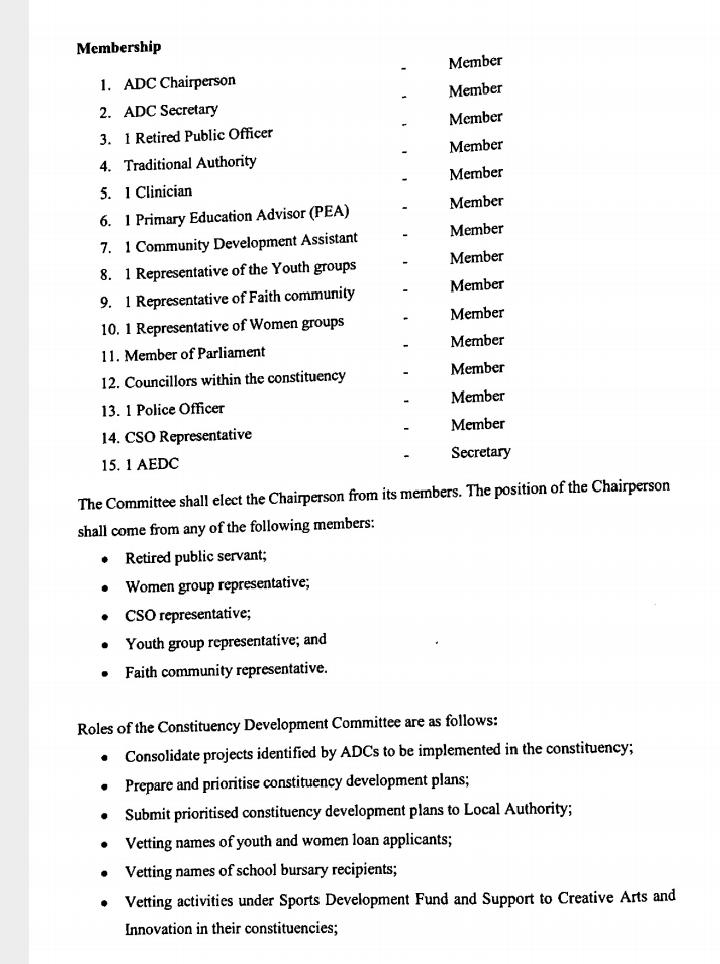
The committee comprises key figures such as the Area Development Committee (ADC) Chairperson and Secretary, a retired public officer, traditional authority, clinician, Primary Education Advisor (PEA), Community Development Assistant, and representatives from youth, women, and faith groups.
It also includes political and institutional actors such as the Member of Parliament, councillors, a police officer, and a Civil Society Organization (CSO) representative, with the Assistant Executive District Commissioner (AEDC) serving as Secretary.
This diverse composition is critical in minimizing the concentration of power and fostering collective decision-making.
By including both technical experts and grassroots representatives, the CDC ensures that development priorities reflect the real needs of communities while maintaining professional oversight.
A notable feature of the structure is the provision governing the selection of the Chairperson.
The Chair is elected from within the committee but must come from non-political and community-based representatives, such as a retired public servant, women’s group representative, CSO representative, youth representative, or faith community representative. This provision strengthens neutrality and reduces the risk of political interference in decision-making processes.
The roles assigned to the CDC further reinforce its accountability mandate. These include consolidating development projects identified at the ADC level, preparing and prioritizing constituency development plans, and submitting these plans to the local authority for implementation. Additionally, the committee is responsible for vetting beneficiaries of youth and women loans, selecting school bursary recipients, and overseeing activities under various development funds such as sports and creative arts initiatives.
Such responsibilities position the CDC as a central body in ensuring that public resources are allocated fairly and used effectively. The inclusion of multiple oversight layers within the committee enhances internal checks and balances, making it more difficult for funds to be mismanaged.
However, while the structure is robust on paper, its success will ultimately depend on its implementation.
Transparency must be actively practiced through regular public reporting, open communication, and adherence to ethical standards. Community engagement, proper record-keeping, and independent audits will be essential in maintaining public trust.
The CDC membership structure provides a solid foundation for transparent and accountable management of the MK 5 billion Constituency Development Fund.
If effectively implemented, it has the potential to drive meaningful development and ensure that resources genuinely benefit communities across Malawi.
About the Author