Malawian-born British businessman Zuneth Sattar, who has been at the center of international corruption investigations, is once again linked to a major government procurement deal.
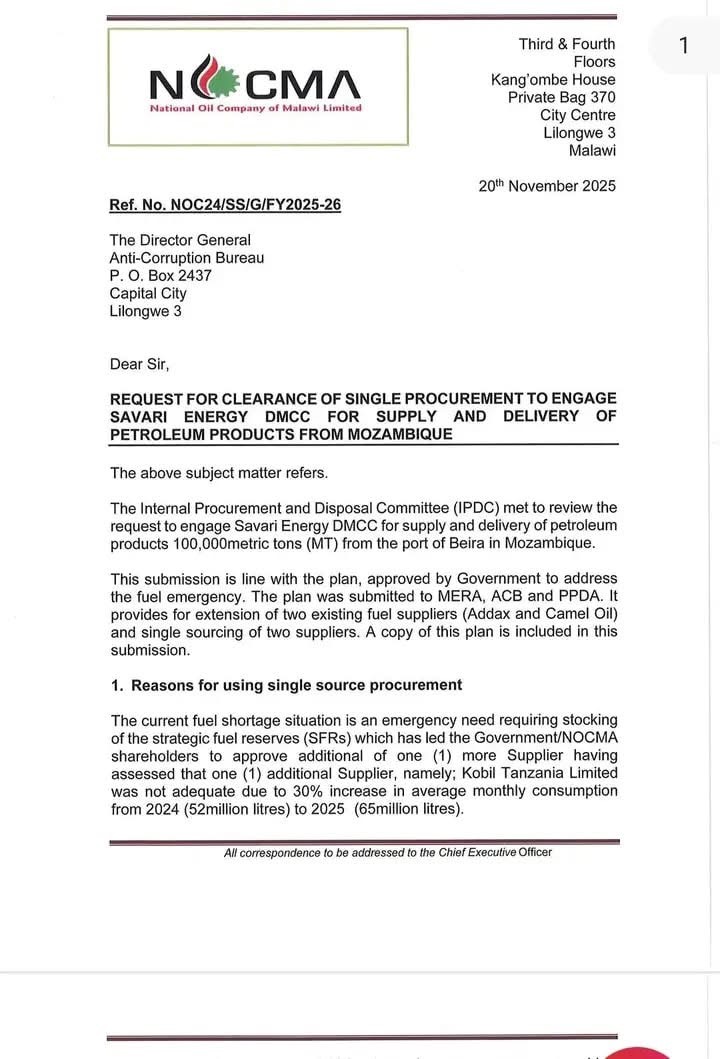
Documents show that the National Oil Company of Malawi (NOCMA) sought clearance from the Anti-Corruption Bureau (ACB) to award a single-source procurement contract to Savari Energy DMCC for the supply and delivery of petroleum products from Mozambique.
Contract Details
According to the official correspondence from NOCMA dated 20 November 2025, the company requested authorization to engage Savari Energy DMCC to supply 100,000 metric tonnes of petroleum products through the port of Beira in Mozambique.
The deal was justified as part of the government’s strategy to address Malawi’s ongoing fuel shortages and increase the country’s Strategic Fuel Reserves (SFRs).
The letter states that Malawi’s fuel consumption increased significantly from 52 million litres per month in 2024 to around 65 million litres in 2025, prompting authorities to consider additional suppliers to stabilize supply.
The procurement was proposed as single-source procurement, citing the emergency fuel shortage and the need for rapid supply.
Sattar’s Long Shadow Over Government Contracts
The award comes as businessman Zuneth Sattar continues to face serious corruption allegations internationally.
Sattar has been charged in the United Kingdom with multiple bribery offences linked to securing government contracts in Malawi. Prosecutors allege he paid bribes to senior public officials between 2020 and 2021 to win lucrative procurement deals.
Investigations by the UK’s National Crime Agency (NCA) allege that companies associated with Sattar secured over $56 million in government contracts for items such as anti-riot gear, military rations, and armoured vehicles.
The charges form part of a broader corruption scandal that has implicated several high-ranking Malawian officials, including senior government figures and security chiefs.
International Court Case
Sattar is expected to face trial in the United Kingdom over the bribery allegations. The case has drawn significant international attention and is seen as one of the most significant corruption prosecutions connected to Malawi’s public procurement system.
Prosecutors argue that Sattar allegedly orchestrated a network of payments to officials in order to secure multi-million-dollar government contracts.
Despite the ongoing legal proceedings abroad, companies linked to the businessman have continued to appear in government procurement processes within Malawi.
Renewed Questions Over Procurement Transparency
The proposed $25 million fuel supply deal through Savari Energy has therefore raised fresh concerns among governance observers and civil society groups about transparency in Malawi’s procurement system.
Critics argue that awarding large public contracts to companies connected to individuals facing corruption charges risks undermining ongoing anti-corruption efforts.
They also question the use of single-source procurement, a method that bypasses competitive bidding and is typically reserved for emergencies.
Political Context
The development comes amid shifting political dynamics in Malawi, where corruption investigations involving Sattar and senior officials have repeatedly stirred controversy in recent years.
Analysts say the case has become symbolic of the broader struggle against corruption and the influence of politically connected business networks in public procurement.
About The Author