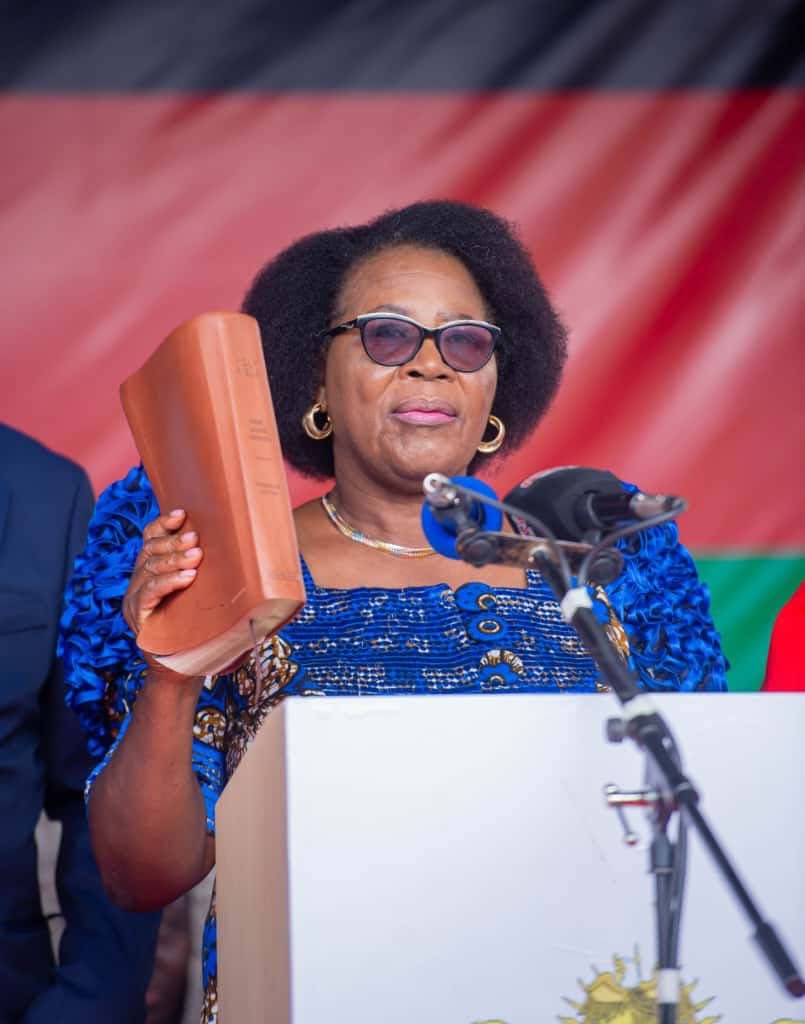
The Chief Secretary to the President and Cabinet, Justin Saidi, who recently mislead Malawians after dismissing claims that there are efforts to force Vice President Jane Ansah to resign is the master minder of the plot . Only Cables can confirm
According to cables, Saidi is allegedly among the key figures orchestrating a campaign aimed at pressuring Ansah to step down. This contradicts his earlier public statements in which he denied the existence of such plans.
Cables suggest that some members within the Democratic Progressive Party (DPP) have, in recent months, been strategizing ways to weaken the Vice President’s position.
These efforts reportedly began in December last year, including organizing a costly personal trip for the Vice President to UK, which was later cancelled after public criticism.
Subsequently, critical functions such as reforms and the Department of Disaster Management Affairs (DoDMA) were reassigned from the Vice President’s office to the Office of the President and Cabinet (OPC), which Saidi oversees.
Additionally, reduced budget allocations to the Vice President’s office are said to be part of a broader attempt to limit her operational capacity.
Notably, Saidi was the official who communicated these structural changes to the public, as well as the dismissal of rumors regarding calls for Ansah’s resignation.
However, cables have it on authority that he is a central figure behind those very efforts.
Other individuals reportedly linked to the alleged unconstitutional pressure to force the Vice President to resign include Francis Mphepo, Chief Advisor to President Peter Mutharika; George Chaponda, Minister of Foreign Affairs; and James Naphambo, Chairperson of the National Economic Empowerment Fund (now branded MEDF).
Despite taking an oath to uphold and defend the Constitution of Malawi, Saidi is accused of leading efforts that undermine the constitutional role of the Vice President.
These developments come just six months after the DPP assumed power, raising concerns about internal divisions within the party.
Historically, the DPP has experienced strained relationships with its vice presidents, including Joyce Banda in 2011 and the late Saulos Chilima in 2018, who later formed the UTM Party.
The current situation suggests a recurring pattern, as tensions once again emerge between the party leadership and its Vice President, Jane Ansah, barely months into the administration.
Few days after the swearing ceremony of President Mutharika, cables reported that there were strong divisions and infighting in the DPP government.
About The Author