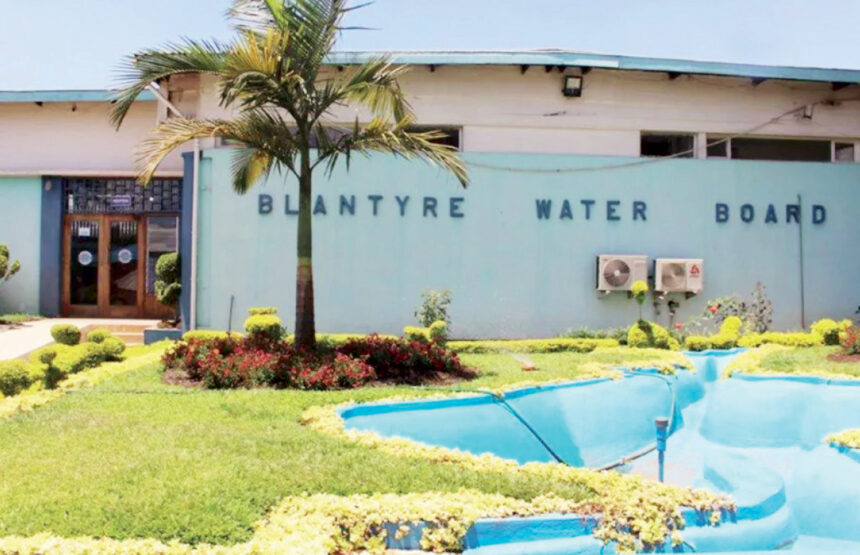
Inside BWB’s Financial Crisis, Controversial Deals and Boardroom Battles
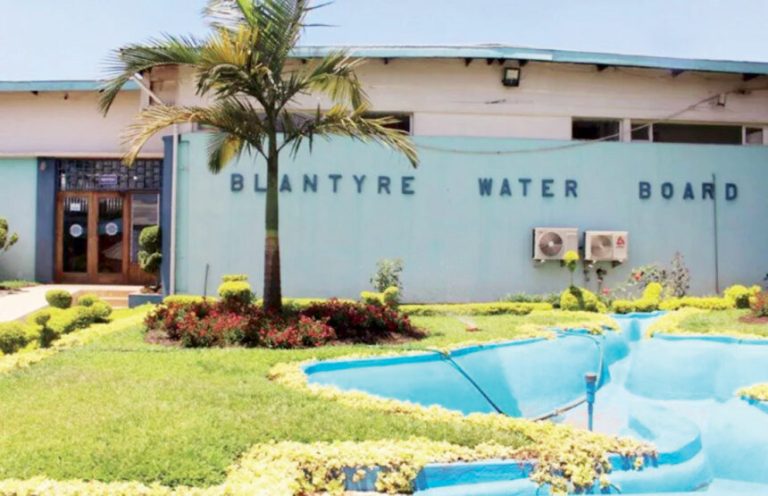
Blantyre Water Board (BWB), the institution entrusted with supplying safe and reliable water to one of Malawi’s largest cities, is facing serious governance issues over its financial health, dubious procurement decisions and management of public resources.
An investigation by Cable Malawi has uncovered a series of issues that warrant closer scrutiny, ranging from the controversial diversion of millions of dollars from water-sector projects to Zambia’s emergency maize procurement programme, to allegations surrounding chemical stocks, board oversight and internal decision-making.
Our investigations focused on Five key issues :
1.THE US$13.9 MILLION MAIZE TRANSACTION — WHO APPROVED IT AND AT WHAT COST?
- WHAT EXACTLY IS IN BWB’S CHEMICAL STORES?
- THE BOARD OF DIRECTORS — GOVERNANCE OR PERSONAL LOYALTY?
- MANAGEMENT CRISIS AND THE BACKDOOR OPERATIONS
5: THE PREPAID WATER METERS DEAL, PROCUREMENT AND THE TWO POWER CENTRES
6: THE FINANCIAL NUMBERS TELL A WORRYING STORY
1: THE US$13.9 MILLION MAIZE TRANSACTION — WHO APPROVED IT AND AT WHAT COST?
One of the most significant issues surrounding BWB concerns the use of funds originally allocated to water and sanitation projects in connection with Malawi’s emergency maize procurement from Zambia.
Information published by The Nation on October 2026 indicates that Information and Communications Technology Minister Shadric Namalomba acknowledged that US$13.9 million from BWB-related project resources was used for the maize procurement.
According to the minister, the World Bank approved the reallocation of undisbursed balances from three ongoing projects, while the government contributed additional domestic funding.
The money was not simply BWB’s ordinary operation revenue but It was project financing intended for development activities within the water and sanitation sector.
The World Bank had previously approved a US$145 million grant for the Malawi Water and Sanitation Project, which is intended to improve water infrastructure, sanitation and the operational and financial efficiency of BWB.
Cable Malawi believes the public deserves access to the relevant approval documents, revised budgets and implementation schedules.
2: WHAT EXACTLY IS IN BWB’S CHEMICAL STORES?
Another element we investigated was chemicals held within BWB facilities and whether all stocks are appropriate for treating drinking water.
Sources familiar with internal operations have revealed to this publication that chemicals associated with swimming-pool treatment have been kept within the institution, and being used to treat the water that the people of Blantyre have been using.
This raise a legitimate public-health question on what chemicals are being procured, stored and used in BWB’s water-treatment processes?
Cable Malawi is seeking technical clarification on the chemical inventory, procurement records, safety data sheets, water-treatment procedures and laboratory test results.
Malawians living in the city of Blantyre deserve scientific answers as the only way for Water board to come out clean .
3: THE BOARD OF DIRECTORS — GOVERNANCE OR PERSONAL LOYALTY?
The composition and effectiveness of BWB’s board have also come under scrutiny.
The board, chaired by Stanley Chirwa, was appointed in January 2026, with BWB publicly announcing that its members would focus on efficiency, accountability, procurement and sustainable water supply.
However, questions have subsequently emerged over the board’s relationship with management and the qualifications and experience of individual directors.
Cables are examining appointment records, professional backgrounds and the extent to which the board is fulfilling its oversight responsibilities.
The investigation is also examining allegations that certain directors are more concerned with maintaining proximity to influential individuals than providing independent institutional oversight.
A public institution cannot afford to have its board reduced to a ceremonial structure. Directors must provide strategic direction, scrutinise management and protect the interests of consumers.
This is not what is happening at Blantyre water Board .
4: MANAGEMENT CRISIS AND THE BACKDOOR OPERATIONS
The management crisis at BWB is another major area of concern.
The institution has experienced disagreements between its board and executive management, including disciplinary and administrative decisions involving senior officials.
In February 2026, several senior managers were reportedly placed on forced leave to pave the way for an independent forensic audit.
The officials included Director of Finance Paul Chiumia, Director of Technical Services Mavuto Chiipanthenga, Director of Distribution and Commerce Verson Julian Kafodya, Director of Human Resource and Administration Mercy Phiri, and Procurement and Disposal of Assets Manager Andrew Puleni.
The subsequent dispute involving former Chief Executive Officer Yeremiah Chihana has further exposed the tensions between the board and management.
But behind these management problems are dubious deals that are at the center of these fights .
5: THE PREPAID WATER METERS DEAL, PROCUREMENT AND THE TWO POWER CENTRES
Our investigation has established that water meter deals have made politicians and some officials connected to this government water billionaires.
At the center of it , are dry taps in the city . The firing of the board CEO is not connected only to the issues raised in the letters that were sent to him but all water meter contracts amounting to billions .
6: THE FINANCIAL NUMBERS TELL A WORRYING STORY
The financial position of BWB provides an important context for these investigations.
Information published on the Malawi Government’s Public Sector Reforms Management Information System indicates that BWB recorded an unaudited net loss of K10.2 billion for the financial year ending March 31, 2025.
Its accumulated losses stood at K108.7 billion, while long-term liabilities were reported at K76 billion.
The same government report indicates that non-revenue water reached 58 percent in the 2024/25 financial year.
This means a significant proportion of treated water was not generating revenue, whether through physical losses, leakages, metering inefficiencies or commercial losses.
These are not minor financial challenges. They point to deep structural problems requiring urgent institutional attention.
Or it is another way that the board is using to steal tax payers money .
On October 21, 2026, Parliament’s Public Appointments Committee summoned BWB officials to answer questions relating to governance, executive management changes and administrative decisions.
Reports by The Times Group indicated that PAC was concerned about disagreements between the board and the former CEO, as well as decisions affecting the institution’s operations.
Separately, Nation Online reported that BWB directors declined to respond to allegations contained in an employee petition, citing the absence of signatures on the document. The committee subsequently adjourned the engagement.
The employee allegations reportedly included concerns about procurement processes, supplier payments, interference in operational matters, staff transfers and the use of public resources.
Water is not a luxury. It is a basic necessity and a public-health requirement.
Blantyre residents should not have to worry about the quality of the water coming through their taps while the institution responsible for supplying it faces questions over finances, governance and management.
Cable Malawi is continuing to examine documentary evidence, procurement records, financial information and accounts from people familiar with BWB’s operations.
This investigation is not about protecting individuals or attacking institutions. It is about accountability, public resources and the right of Malawians to safe and reliable water.
About the Author