NBS Bank plc has challenged local councils in Malawi to strengthen revenue collection, improve financial accountability and deliver tangible development, saying the country’s future prosperity depends on how effectively resources are managed at local level.
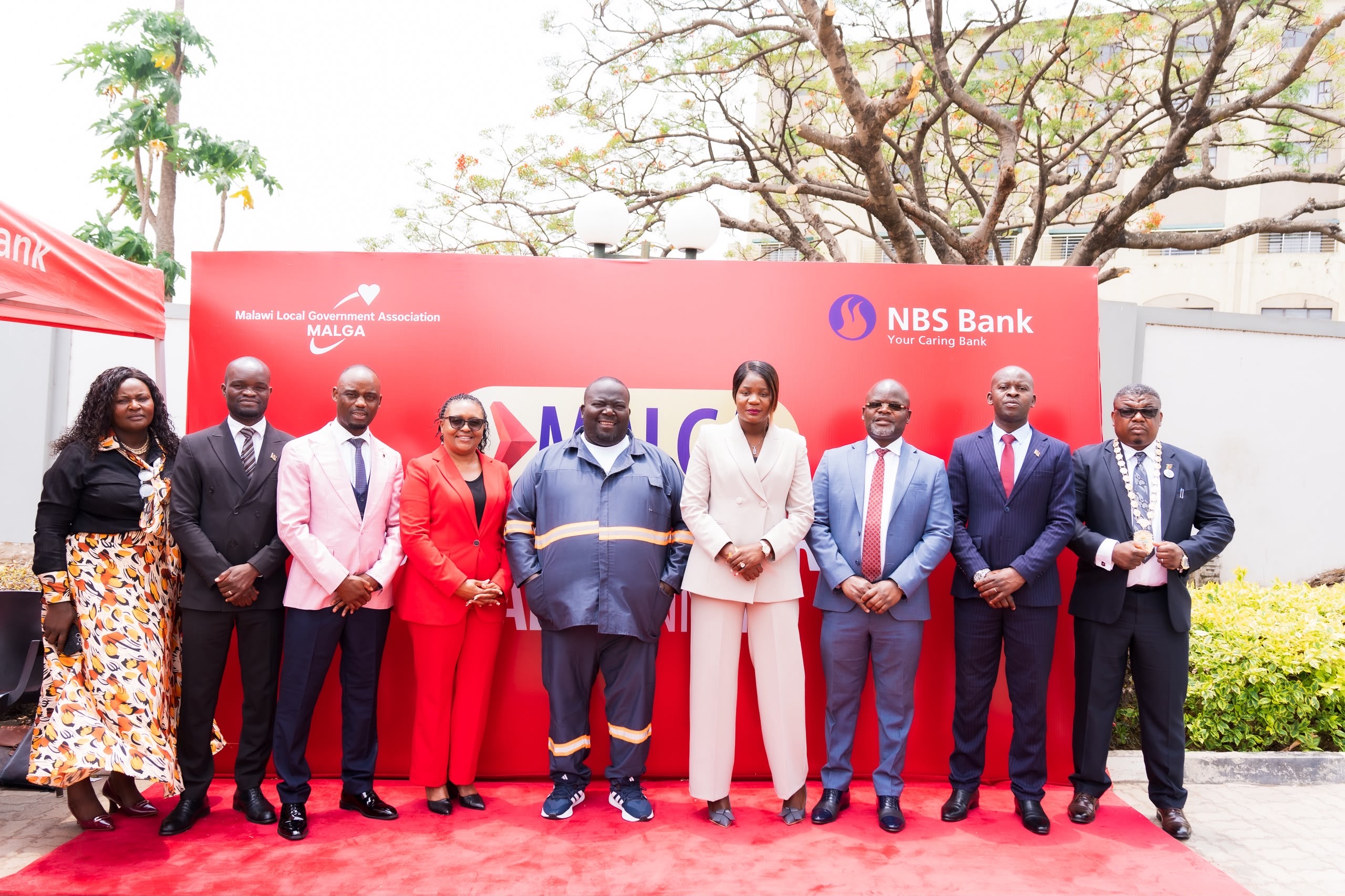
The bank made the call during the Malawi Local Government Association (MALGA)’s 20th Annual General Assembly, where NBS Bank participated as a Platinum Partner.
In an address to the assembly, the bank’s representative Mr. Alfred Nhlema said fiscal devolution should go beyond transferring financial resources to councils and focus on improving accountability, strengthening service delivery and transforming local economies.
“The future of Malawi will not be determined merely by how much money we distribute to our councils, but by how much transformation our councils deliver with that money,” Nhlema said.
The address highlighted the importance of empowering councils to mobilise their own revenue, manage public finances responsibly and create opportunities for investment, enterprise and employment within their respective districts.
The bank argued that devolution must involve the transfer of responsibility and accountability alongside financial resources to ensure that development reaches communities.
“Because when resources move closer to the people, development must move closer to the people. Otherwise, we have decentralised administration without decentralising prosperity,” Nhlema said.
Drawing lessons from other African cities, the address cited Kampala’s growth in locally generated revenue, Rwanda’s performance-based accountability system for local leaders and Johannesburg’s use of green bonds to finance environmental projects.
The examples were presented as evidence that strong institutions, effective administration and credible financial systems can help local authorities improve revenue generation and attract investment.
The address emphasised that councils should demonstrate efficiency in collecting and managing existing revenue before demanding additional resources.
“Before we ask citizens to pay more, let us demonstrate that we can collect better. Before we demand more resources, let us account for what we already have,” he added .
The bank also challenged councils to move away from measuring success primarily through expenditure and instead focus on the value their investments create for citizens.
It said every district has economic potential that can be unlocked through effective leadership, sound financial management and the implementation of development projects that improve people’s livelihoods.
NBS Bank said it was ready to explore practical financial and technological solutions to help councils improve revenue collection, strengthen public accountability and manage their finances more effectively.
These include digital revenue collection systems, secure payment solutions, improved cash management and responsible financing opportunities.
The bank said such interventions could help councils make transactions more transparent, improve financial planning and ensure that public resources contribute to meaningful development.
The representative stressed that NBS Bank’s ambition went beyond providing conventional banking services to local authorities, saying the institution wanted to help unlock the economic potential within Malawi’s districts.
“We are not interested merely in banking the councils of Malawi. We want to help unlock the economies within those councils,” the representative said.
The bank reiterated its commitment under the slogan “We Care a Little More,” positioning its role as a potential partner in supporting local economic development.
As MALGA marked its 20th Annual General Assembly, the address challenged councils to become drivers of prosperity rather than institutions focused solely on administering budgets.
It urged local authorities to prioritise measurable results, including improved roads, thriving markets, reliable public services and increased opportunities for young entrepreneurs.
“Will we continue to admire the cities of others, or will we build cities that others come to admire?” the representative asked.
The address concluded that Malawi’s development would depend on decisions, discipline, accountability and effective implementation rather than promises alone.
“The next chapter of Malawi’s development will not be written by intentions. It will be written by decisions. By discipline. By delivery. And above all, it will be written locally,” the representative said.
The message reinforced the need for local authorities, government and financial institutions to work together to ensure that fiscal devolution translates into visible improvements in the lives of ordinary Malawians.
About the Author