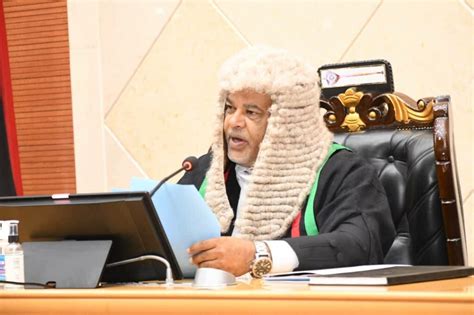
Speaker of the National Assembly Sameer Suleman has challenged government spokesperson over seven-day ultimatum to produce evidence of corruption
This has intensified a dispute between Speaker of Parliament Sameer Suleman and government spokesperson Shadric Namalomba over how allegations of corruption within government should be investigated.
Suleman has criticized Namalomba for giving him seven days to provide evidence supporting his allegations of corruption involving some government officials.
In response, Suleman asked:
“When did Namalomba become a police officer or an ACB official?”
According to media reports, Namalomba challenged Suleman to submit evidence of his corruption allegations to the Anti-Corruption Bureau (ACB), or stop making accusations without presenting evidence to the relevant authorities.
However, Suleman argued that Namalomba has no authority to impose a deadline on him to produce evidence, maintaining that a government or party spokesperson is neither a police officer nor an ACB investigator.
The Speaker further insisted that he has sufficient evidence to support his allegations and is ready to work with the relevant institutions to ensure that justice is served.
He maintains that the allegations should be handled through appropriate channels to ensure a proper investigation.
The disagreement comes as Suleman has been advocating for Parliament to exercise its oversight powers over government institutions and the management of public resources.
Namalomba, on the other hand, has emphasised that corruption allegations should be referred to legally mandated institutions for investigation, arguing that Parliament does not have the authority to arrest or prosecute individuals.
However, the dispute goes beyond a disagreement between two political figures.
It raises an important question about governance in Malawi: What role should Parliament play in investigating allegations concerning the use of public resources?
Parliament’s oversight responsibilities include scrutinising public expenditure and questioning government institutions about their operations.
At the same time, the ACB and other legally mandated institutions have responsibilities for investigating suspected offences within their respective jurisdictions, while criminal cases must be handled in accordance with the law.
Recent reports have also highlighted comments by former Supreme Court of Appeal judge Dunstain Mwaungulu, who argued that Parliament can investigate suspected wrongdoing, including corruption, but should not usurp the functions of prosecuting authorities or the courts in determining criminal guilt.
While political leaders continue to disagree over who has the authority to initiate or lead investigations, Malawians expect allegations involving public resources to be handled fairly, transparently and without favouritism.
Malawians want answers, credible evidence and justice.
About the Author