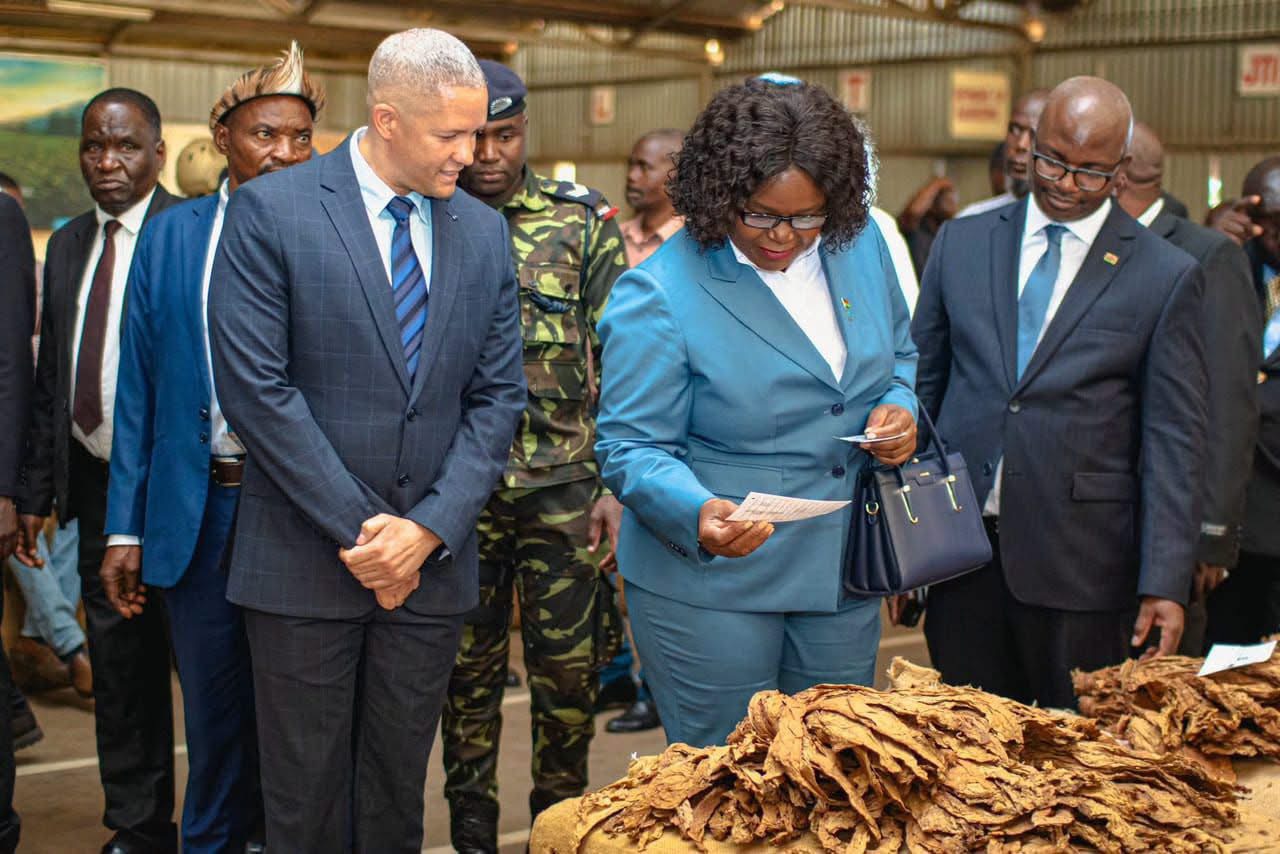
Tobacco farmers in the country are crying foul as this year’s tobacco marketing season closes today, with many describing it as one of the most painful marketing seasons they have experienced in the past three years.
The figures tell a troubling story. Farmers have seen a sharp decline in the amount of tobacco sold, the average price per kilogramme, and the total income earned from the crop.
This year, farmers have earned a total of US$286.1 million (approximately K500.9 billion) from tobacco sales.
This is a significant drop from the US$542.3 million (approximately K949.5 billion) that farmers had earned by the time the market closed last year.
In other words, farmers’ tobacco earnings have fallen by approximately 47% compared to last year.
This year, farmers sold 144.5 million kilogrammes of tobacco at an average price of US$1.98 (K3,466) per kilogramme.
Last year, farmers sold 221.2 million kilogrammes at an average price of US$2.45 (K4,289) per kilogramme.
The figures therefore show a double blow for farmers: the volume of tobacco sold has fallen sharply, while the average price per kilogramme has also declined.
Farmers are also facing rising production costs, including fertiliser, chemicals, labour and other agricultural inputs. As a result, lower tobacco prices can significantly reduce their profit margins.
For many farmers, the problem is therefore not simply the amount of money generated from tobacco sales, but the growing gap between what they earn and what they spend to produce the crop.
As the tobacco market closes today, the figures tells a different story for the government, tobacco buyers and stakeholders across the industry:
Can Malawi make tobacco profitable enough for farmers to continue relying on it as a major source of income?
About the Author